Explainer: How Israel's October 27 Election Actually Works | Israel Politics Post
Explainer: How Israel's October 27 Election Actually Works
With 38 parties running, roughly 7.33 million eligible voters, and polls showing neither major bloc near a majority, the smaller parties that clear the 3.25 percent threshold are likely to decide who ends up forming the next government.
3-MIN READ
By Israel Politics Post Staff·Published
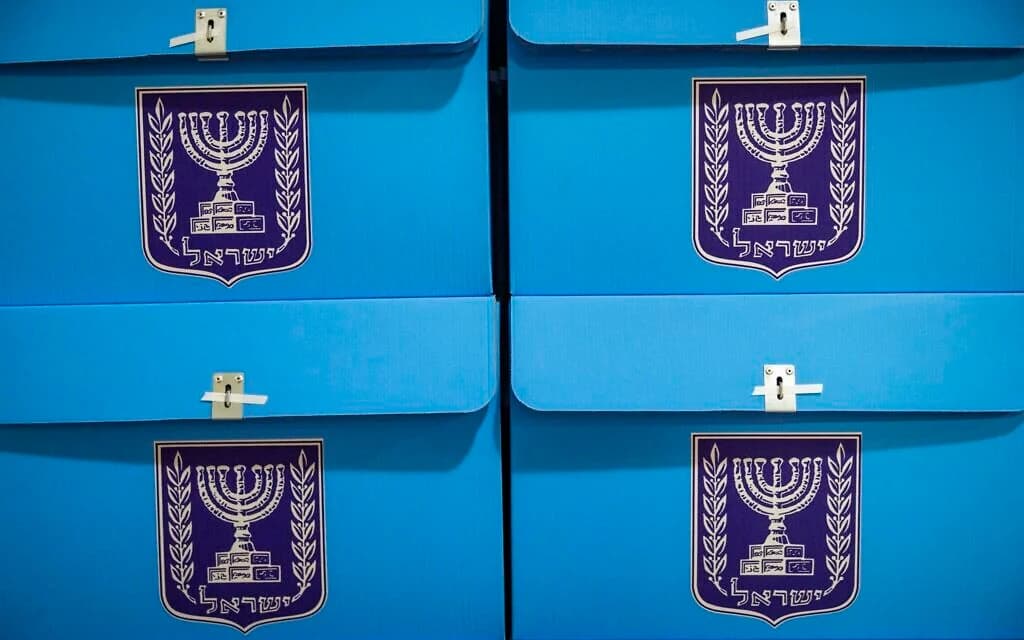
Workers prepare ballot boxes for the upcoming election at a Central Elections Committee warehouse in Shoham · Source: Yonatan Sindel/Flash90, via The Times of Israel
As Israel heads toward its October 27 election, The Times of Israel published an explainer laying out the mechanics of a system that often confuses outside observers used to simpler, two-party races. Roughly 7.33 million Israelis are eligible to vote, choosing among 38 competing parties, though only around 11 are expected to clear the 3.25 percent threshold needed to win any seats at all in the 120-seat Knesset.
Prime Minister Benjamin Netanyahu's Likud and Gadi Eisenkot's Yashar party are the two biggest contenders, but as the explainer notes, "the parliamentary system is not a two-party system," and in principle any party leader whose list clears the threshold could end up prime minister if they can assemble a coalition of at least 61 Knesset members.
After votes are counted, Israel's president formally selects the candidate judged to have the best chance of building a governing majority. That candidate then has 28 days, extendable by another 14, to secure the backing of at least 61 lawmakers. Recent polling shows neither Netanyahu's bloc nor Eisenkot's bloc reaching that number on its own, which means the parties that just barely clear the electoral threshold could end up with outsized leverage over who actually governs.
The Knesset's 120 newly elected members are sworn in 14 days after the vote, and can begin legislating even while coalition negotiations are still underway, a detail that means Israeli political life rarely pauses for long, even in the uncertain weeks between an election and the formation of a new government.