Iran producing up to 50 ballistic missiles a month, half its prewar rate — report
A Western intelligence assessment says Iran is manufacturing about 50 ballistic missiles each month despite months of US and Israeli strikes, and may still hold at least 1,700 missiles.
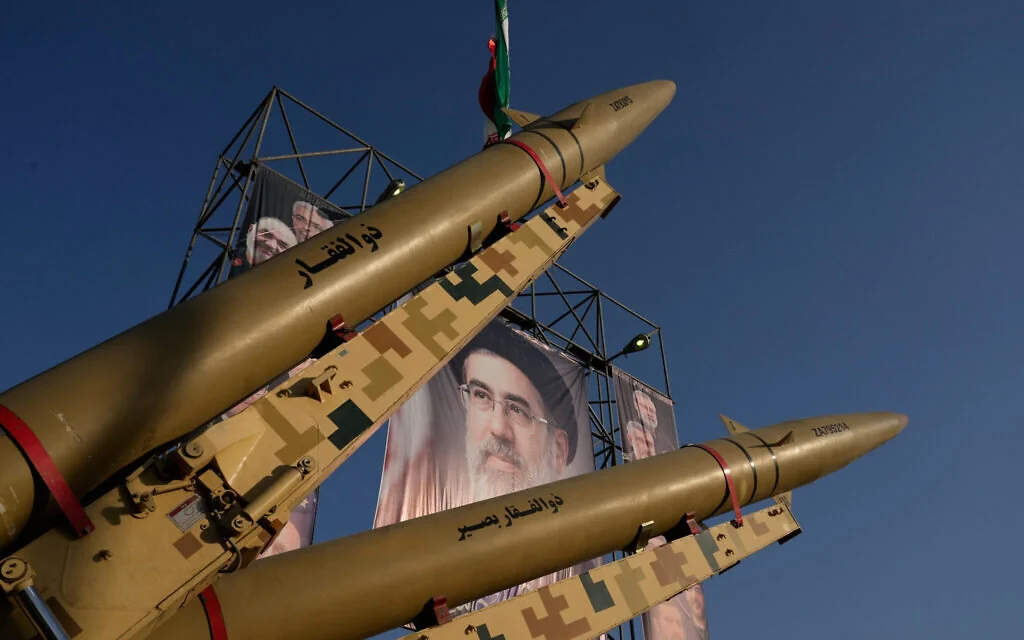
Iranian missiles on display at a military exhibition in Tehran · Source: AP / Times of Israel
Iran is producing about 50 ballistic missiles a month, roughly half its prewar capacity, according to a Western intelligence assessment reported by Bloomberg. The estimate suggests Tehran has kept a meaningful production capability despite months of US and Israeli airstrikes.
An unnamed Western official familiar with the intelligence said Iran is believed to still hold at least 1,700 ballistic missiles. The figure contrasts with repeated American claims that the air campaign has severely degraded Iran's missile industry.
Air campaign and remaining capacity
Defense Secretary Pete Hegseth said this week that more than 80% of Iran's nuclear industrial base had been destroyed. The new assessment, however, indicates that Iran's missile factories have continued operating at a reduced but still significant pace.
The report also said Iran may retain thousands of Shahed-type attack drones, the low-cost weapons it has used against Israel, US forces and shipping in the Gulf. The exact size of both missile and drone stockpiles remains uncertain.
The cost of defence
The assessment looked at American consumption of weapons during the conflict. Iran's missile and drone strikes forced US and allied forces to fire at least 1,000 Patriot interceptors, which cost about $4 million each and are produced at a rate of roughly 650 per year. That suggests the war has drained missile defences faster than industry can replace them.
Bloomberg also estimated that Iran launched more than 4,900 Shahed weapons over the course of the war, underlining the scale of the drone campaign.
Political signalling
Iranian officials have used the figures to project strength. Mohsen Rezaei, a senior security official, told a Lebanese television channel that Tehran would not allow even a single particle of enriched nuclear material to leave the country, and that Iran wanted the material for nuclear-powered ships and submarines.
The intelligence estimate leaves open the question of how long Iran can sustain its production rate under sanctions and continued strikes. But the report makes clear that Iran still has a formidable retaliatory option if hostilities resume, a reality that Israeli and Gulf air defence planners must account for.