Lebanon's Jews Recall a Lost Community as Israel Talks Stir Cautious Hope | Israel Politics Post
Lebanon's Jews Recall a Lost Community as Israel Talks Stir Cautious Hope
A community that once numbered up to 20,000 has dwindled to roughly 20 people still in the country, but renewed Israel-Lebanon contacts and a prisoner release have put Lebanon's Jewish history back in the spotlight.
3-MIN READ
By Israel Politics Post Staff·Published
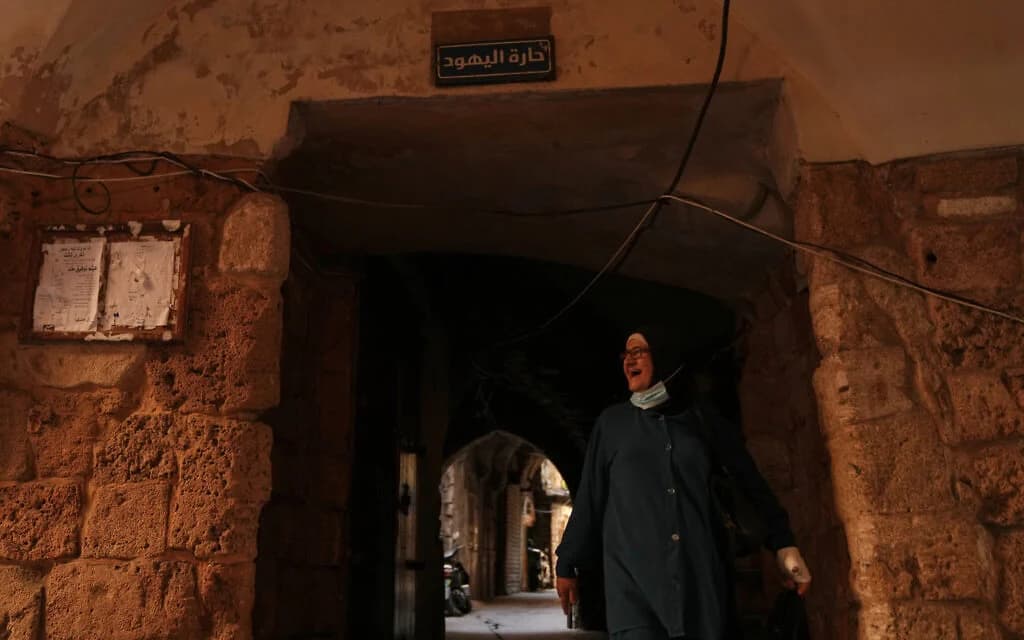
A woman walks beneath a sign reading 'Jewish Quarter' in the old city of Sidon, southern Lebanon · Source: AP Photo/Hassan Ammar, via The Times of Israel
Rabbi Elie Abadie left Lebanon more than fifty years ago and has never been back, yet he still keeps thousands of Arabic songs on his phone, and his wife learned to cook Lebanese dishes from his mother, The Times of Israel reported. He switches between Arabic and French when speaking with his siblings, a reminder of Lebanon's history as a former French protectorate.
Lebanon's Jewish community, once among the most vibrant in the Arab world, has faded almost entirely from public memory as its members emigrated over the decades. Recent Israel-Hezbollah hostilities and the peace talks that followed have brought renewed attention to that history, helped along by Israel's release last month of five Lebanese detainees after Lebanon assisted in locating the remains of Jewish community leaders who were kidnapped and killed during the country's civil war in the 1980s.
At its peak, Lebanon was home to between 18,000 and 20,000 Jews, concentrated largely in Beirut's Wadi Abu Jmil quarter. Many had arrived after 1948, fleeing persecution in Syria and Iraq for what was then a comparatively safe and religiously diverse Lebanon. That changed after the 1967 Six-Day War, when anti-Israel sentiment hardened following the Cairo Agreement, and it changed further still during Lebanon's 15-year civil war, when armed groups kidnapped members of the Jewish community; at least seven Jews remain among the roughly 17,000 people still listed as missing from that conflict.
Today, only about 20 Jews remain scattered across Lebanon, a remnant of a community whose history is only now, decades later, starting to surface again alongside tentative diplomatic contact between Beirut and Jerusalem.