Netanyahu Bloc at 53 Seats, Eisenkot at 48, as Arab Parties Surge to Record 19 With 85% Counted
A late reversal from exit polls put Netanyahu's camp ahead, but neither bloc is close to the 61-seat majority needed to govern, leaving Arab-led parties as potential kingmakers both sides have ruled out working with.
2-MIN READ
By Israel Politics Post Staff·Published
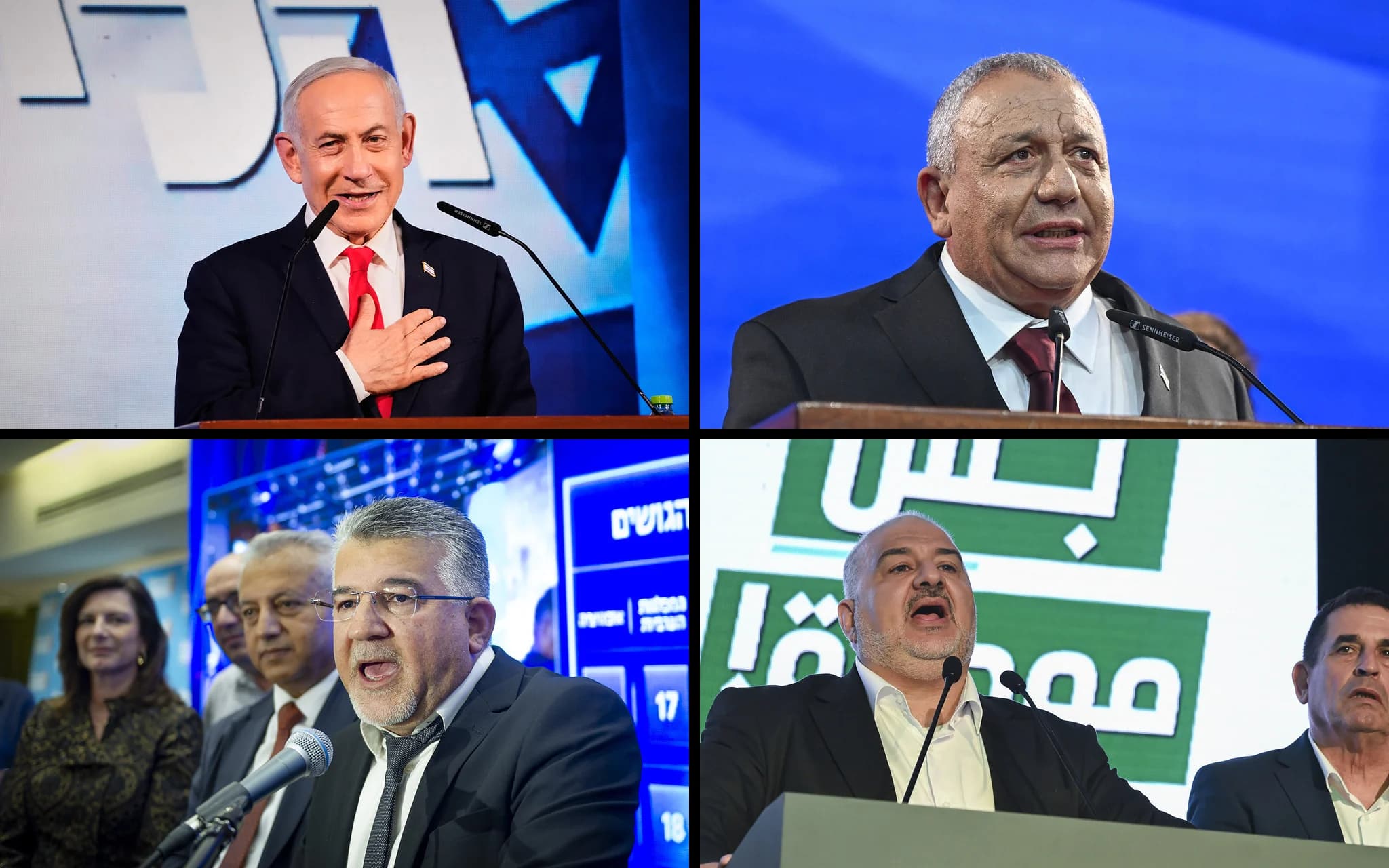
Prime Minister Benjamin Netanyahu, Yashar chair Gadi Eisenkot, Joint List chair Yousef Jabareen and Ra'am chair Mansour Abbas address supporters at their election headquarters · Source: AP Photo/Ohad Zwigenberg, Avshalom Sassoni/Flash90, Sharon Leibel/Flash90 and Michael Giladi/Flash90, via The Times of Israel
With 85.6% of votes counted as of Wednesday afternoon, Prime Minister Benjamin Netanyahu's bloc held 53 Knesset seats to 48 for Yashar leader Gadi Eisenkot's opposition coalition, while Arab-led parties surged to a historic 19 seats, according to a report by The Times of Israel. Both major blocs remain well short of the 61 seats needed for a governing majority, Netanyahu's camp by eight and Eisenkot's by 13.
Within Netanyahu's bloc, Likud held 26 seats, with Shas, United Torah Judaism and Otzma Yehudit at seven each and Religious Zionism at six. Eisenkot's coalition was led by Yashar's 21 seats, followed by B'Yachad with 12, the Democrats with eight and Yisrael Beytenu with seven. The Joint List took 12 seats and Ra'am seven, pushing combined Arab-led representation past the previous record of 15.
The results mark a significant reversal from exit polls, which had shown Eisenkot's bloc leading Netanyahu's by two to three seats; Netanyahu's camp instead pulled ahead as counting continued overnight, a shift that surprised analysts who had expected the exit-poll projections to hold. Officials attributed the Arab parties' surge to record turnout among Arab Israeli voters motivated to remove Netanyahu and his far-right allies from power.
Roughly 430,000 to 480,000 "double envelope" ballots cast by soldiers, prisoners and Israelis abroad remain uncounted, with the next update not expected until Thursday afternoon and final official results due November 4. In the meantime, the Arab-led parties' 19 seats leave them in a potential kingmaker position, even though most opposition leaders have so far publicly ruled out governing with their cooperation, raising the prospect of a prolonged political deadlock.