How Netanyahu's Next-Term Court Overhaul Plans Could Reshape Israeli Democracy | Israel Politics Post
How Netanyahu's Next-Term Court Overhaul Plans Could Reshape Israeli Democracy
With roughly two-thirds of Supreme Court seats set to turn over during the next government's term, a renewed push to limit the court's powers could hand whoever wins the election outsized influence over the judiciary.
3-MIN READ
By Israel Politics Post Staff·Published
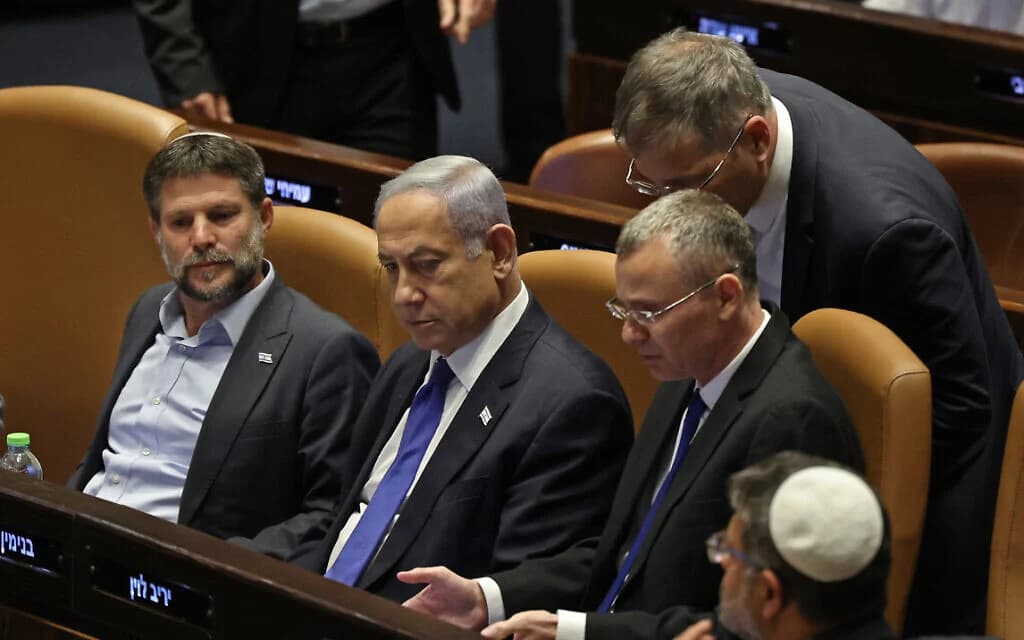
Prime Minister Benjamin Netanyahu attends a parliament session amid protests against the judicial overhaul · Source: Ronaldo Schemidt/AFP, via The Times of Israel
A fresh round of judicial overhaul plans is taking shape ahead of Israel's October 27 election, and the stakes are unusually high: roughly two-thirds of the Supreme Court's 15 seats could turn over during the next government's term, The Times of Israel reported, giving whoever wins a rare chance to reshape the court for a generation.
The proposal, referred to by its backers as "Law and Justice 2," would restrict the Supreme Court's ability to strike down legislation and narrow who is allowed to petition the court in the first place. Supporters frame the changes as a necessary correction that restores majority rule against what they see as judicial overreach; opponents say the same changes would strip away one of the last checks on government power.
Deputy Prime Minister Yariv Levin has been blunt about the goal, reportedly saying that liberal-leaning justices would eventually "simply go extinct" without formal reform to how the court operates. Finance Minister Bezalel Smotrich described the plan more plainly still, calling it "a change in the rules of the game."
Critics have drawn comparisons to the kind of institutional erosion seen in Hungary under Viktor Orban, warning that the changes would ripple beyond the courts themselves into media regulation, religious authority and minority protections. Opposition figures argue that removing meaningful judicial checks would leave a future government with few effective limits on its power, whichever bloc ends up holding it.