
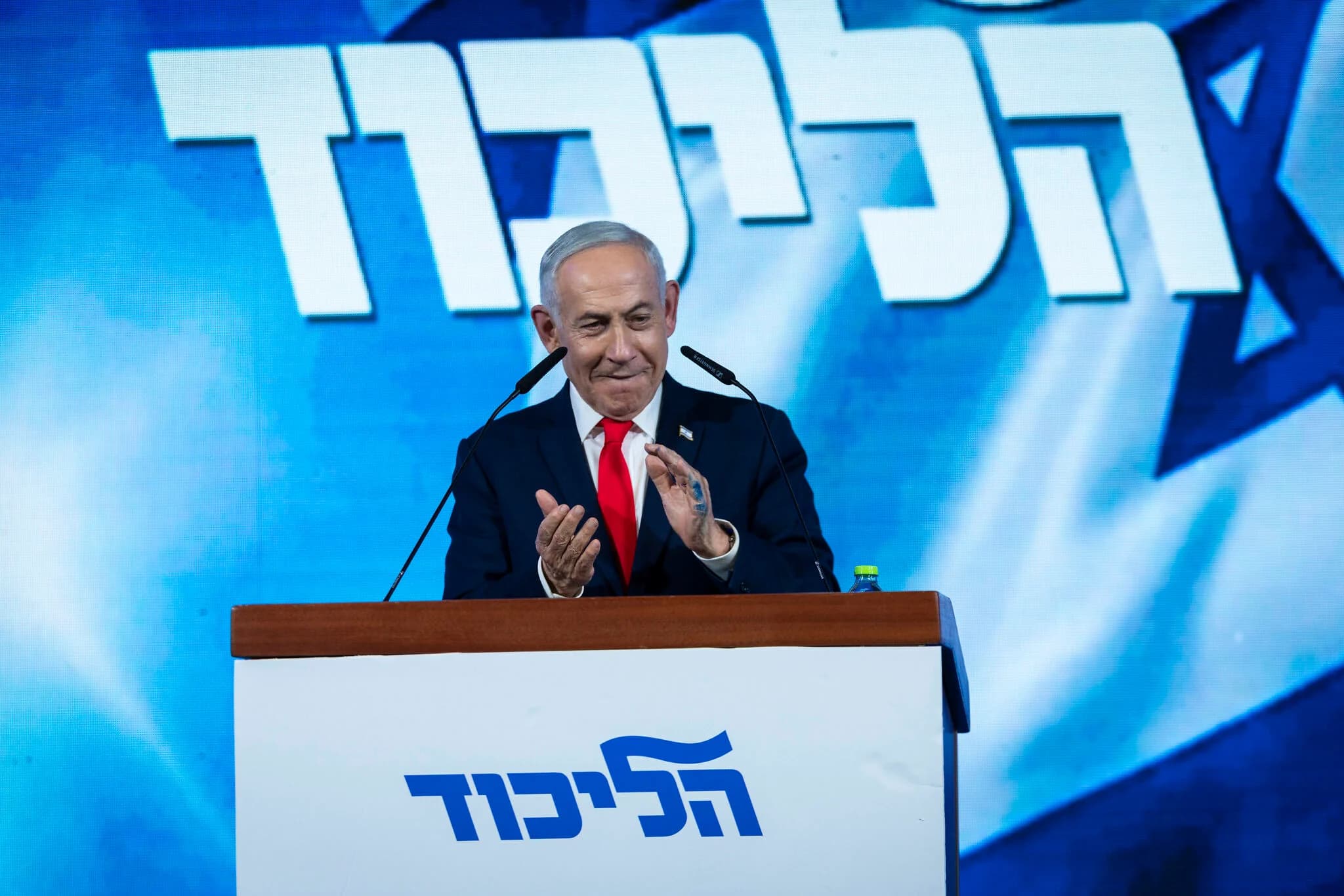
Prime Minister Benjamin Netanyahu reaffirmed his commitment to his far-right coalition partners on October 28, the day after Israel's inconclusive election, telling National Security Minister Itamar Ben Gvir and Finance Minister Bezalel Smotrich, "We are together and we are staying together," according to a report by The Times of Israel. The statement came amid speculation that Netanyahu might instead pursue a unity government with centrist opposition figures now that his bloc, with 53 seats, sits well short of the 61-seat majority needed to govern.
Opposition leader Gadi Eisenkot, whose bloc holds 48 seats, characterized the results as a rejection of Netanyahu's government, saying voters expressed "no confidence in the government of October 7 and draft evasion." He pledged to pursue what he called a "Zionist government" built around mandatory national service for all citizens and a state inquiry into the failures of October 7, and the opposition has also floated replacing current Knesset speaker Amir Ohana with Yair Lapid.
Coalition-building remains complicated on both sides: Democrats chairman Yair Golan has actively sought talks with fellow opposition figures, while Yisrael Beytenu's Avigdor Liberman reportedly cut off contact with other "change bloc" leaders, underscoring how far from unified the anti-Netanyahu camp remains even as Netanyahu moves to shore up his own coalition.